Pandemic journals

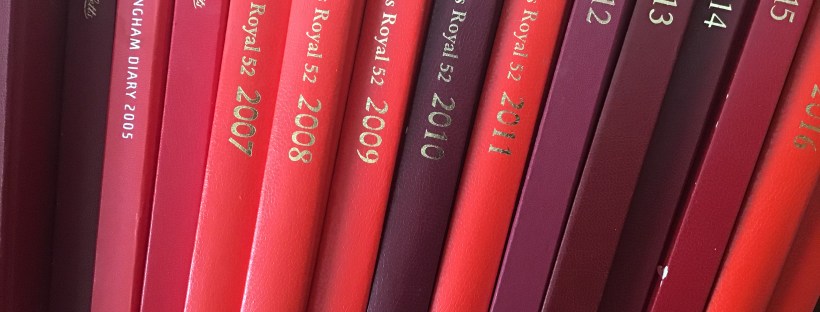
I’ve been keeping a diary since I was 12, when, after a few false starts, it became a daily routine. By the time I was in my late teens I knew that this was a habit I’d keep for life; now, I find it unimaginable to think how I would function without it.

I’m not obsessive about it: I don’t take my diary on holiday, and I might miss the occasional entry after a late night.

For some people, it’s the act of diary-writing that is so precious – that feeling of confiding in someone, treating the diary almost like an intimate friend. For me, the really valuable thing is being able to read my diaries back. This helps me to spot patterns – ‘Oh, I always feel like that at the end of January!’ – which can bring a sense of relief. It’s also very handy if you’re involved in an argument with someone about the details of when or how something happened! More than anything, I just love being able to go to my diaries and look up what I was doing, thinking and feeling on any particular day.

I gain such satisfaction from keeping a diary that I’m delighted when I can spark that interest in others. 12 years old seems to be a fairly typical age for starting a diary, so I’ve often tried to chat to the children in my life about it at around that age, in the hope that they too might be bitten by the diary-writing bug.

But it’s not something I’ve ever particularly explored with my students.

And then the pandemic arrived. And all of a sudden we had to set two weeks’ worth of work for our classes to do independently at home before we (and they) could regroup for the Easter holiday. In thinking what to set for my Year 9 classes I was aware of two things: firstly, that an awful lot of the work they were being set was likely to need to be completed online; and secondly, that they were living through an epoch-defining historical event that they would be talking about for the rest of their lives.

For both of these reasons, setting my students the task of keeping a personal journal during this period felt like a really good project. Although obviously I had to set the work through my school’s remote platform – the students would need to go online to find out what to do – the first task I set was to find or buy a notebook – ideally one which reflected their personality or that seemed to them like a lovely or special object to write in. It felt important for these journals to be actual artefacts, rather than electronic documents. Assuming that most of my students would not be regular diary-writers, I explained to them that I wanted them to develop the habit of writing in their journals about their daily lives at least twice or three times a week if possible (and more often if they liked), but I also set a few short tasks each week for them to do. These were tasks that I hoped would help them to engage with the physical and natural world around them, as well as encouraging them to see the current situation from different perspectives.

Diaries are best-written, I think, when they are written without fear of anyone else reading them, and when they reflect the specific, everyday detail of what’s going on at the time – however trivial or dull that might seem.

So I’ve told my students that I won’t be ‘marking’ their diaries – that they are entirely personal to them. However, I have encouraged them to photograph snippets from them that they are happy to share, and to send them to me. It’s been fascinating to read what they have written so far, and I am struck once again by the resilience of so many young people in the face of quite extraordinary circumstances and restrictions.

I hope both that these journals will become precious artefacts for my students to look back on when they are much older, and also that for some of them, this kindles a regular diary-writing habit that will last them a lifetime.

Here are some of the tasks I’ve set my students to do in their journals:

Write today’s date at the top of the first page. Set a timer for 15-20 minutes and just free-write without thinking too hard about it. Write about this weird last week. Write about the changes in your life, your hopes and fears, what you’ve noticed most in the world around you, in terms of what’s stayed the same and what’s different. After your timer has gone, read back through what you wrote. Think if there’s anything else that a future you (in ten or twenty years’ time) might find interesting about what’s going on right now. Spend another 20 minutes adding anything else you want to.

Find something to stick in your journal. This might be a poem or an inspirational quotation that you find. It might be a feather or a petal that you pick up outside. It might be a ticket to something that you can no longer go to. You decide. It’s up to you if you want to add a note next to this or not.

Go outside – if you can do so safely. Otherwise, look out of a window. Write a journal entry from the perspective of a living creature you can see, for example a butterfuly, ant or robin. What does the garden or street look like from this creature’s point of view?

Find a poem either online or in a book which can provide you with inspiration at this time. Copy it by hand or print it out and stick it into your journal. Illustrate and/or annotate it with your response to it.
Living words

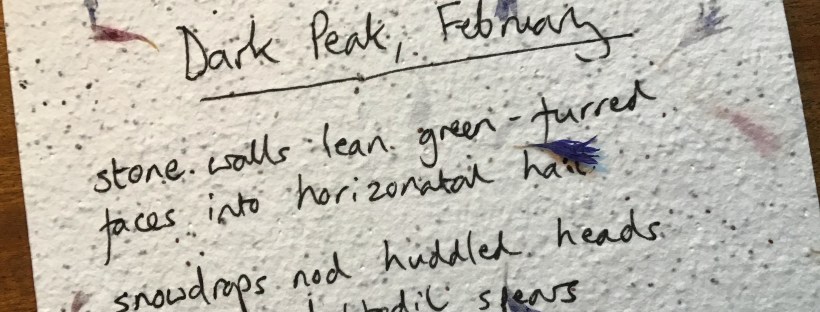
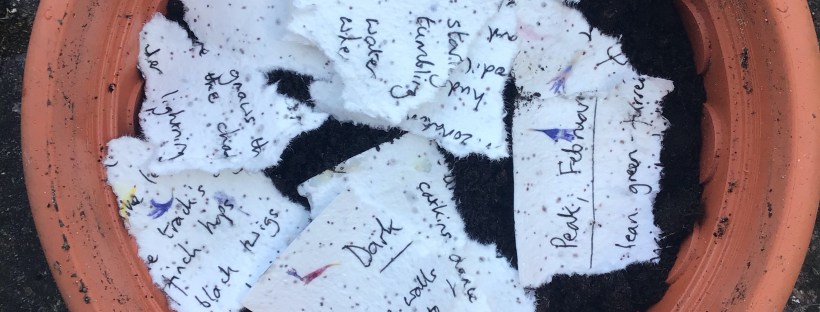
I’m really grateful to my friend Sean Dooley for sending me a poem written on seeded paper all the way from Shanghai and setting my teachers’ writing group the challenge of writing our own poems on plantable paper.

We’ll meet later this week to share our poems, with a view to planting them afterwards and seeing what comes up in the spring. Much as it feels a bit sacrilegious to plan to bury something in the earth that we’ve each created so recently, I also love the idea of literally growing something out of a poem. I hope to be able to post some pictures later on of what grows from our words.

The poem I’ve written, ‘Dark Peak, February’, was inspired by a visit to The Peak District during half term, during which I led a creative writing workshop for Her on a Hill. We were able to get outside despite Storm Dennis, although we were glad to retreat to the church hall in the afternoon to develop our writing further over tea and cake in the warm and dry.

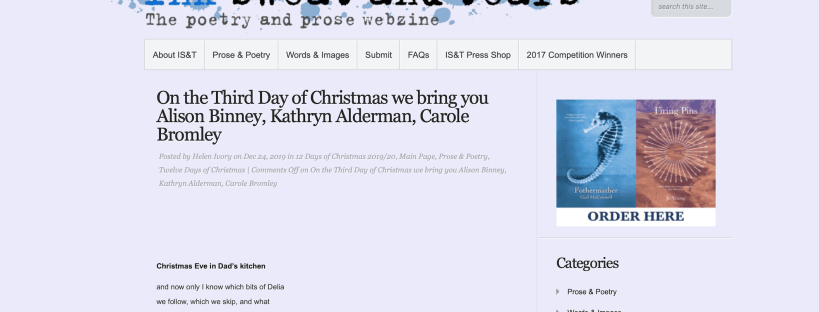
12 Days of Christmas on Ink, Sweat and Tears

For the last few years I’ve loved following the Ink, Sweat and Tears ’12 Days of Christmas’ feature, which runs this year from 22nd December to 2nd January. It’s fascinating to see different people’s perspectives on this time of year. I was delighted to have my poem Christmas Eve in Dad’s Kitchen featured on 24th December, alongside beautiful, poignant poems by Kathryn Alderman and Carole Bromley.

Oxford Brookes International Poetry Competition

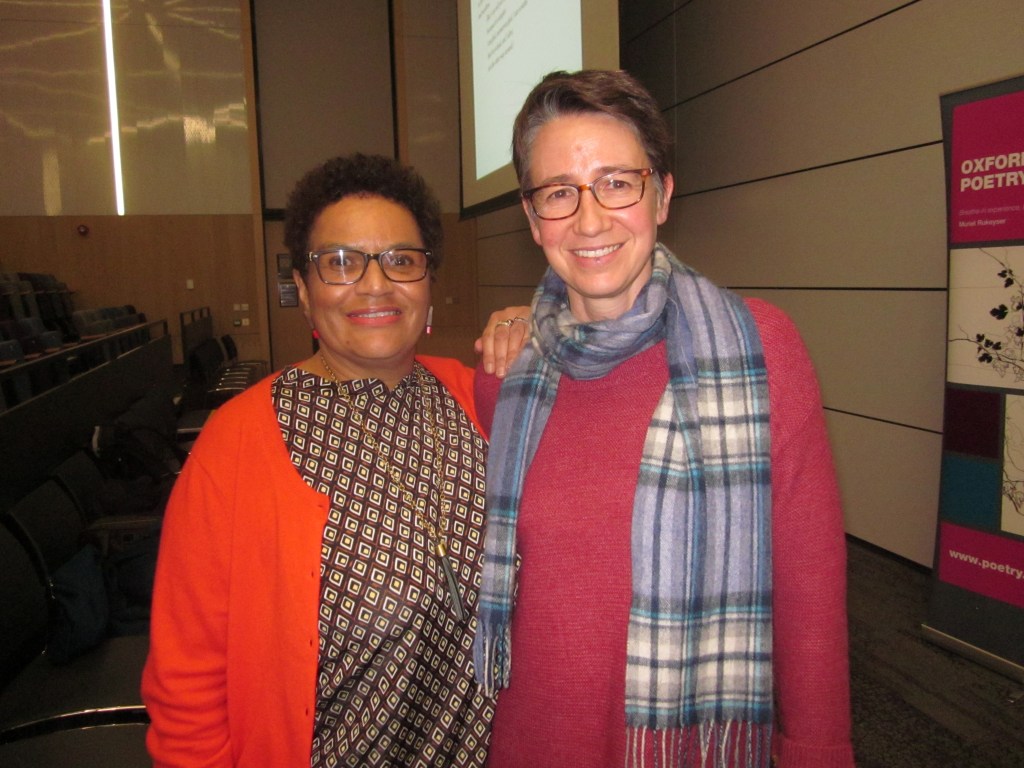
2001 was my final year as an English teacher at Richmond School in North Yorkshire, the school where I’d very happily spent the first four years of my teaching career. The highlight of my time there came that spring, when I took a group of sixth form students for a week’s writing course run by the Arvon Foundation at Lumb Bank.

Our tutors that week were the late Julia Darling and Jackie Kay. Both were inspirational tutors: funny, patient, wise, generous with their time and feedback, and full of both playful and subtle exercises to get us all exploring new territory with our writing. It’s no overstatement to say that the week was life-changing for those students, several of whom had come to it from challenging personal circumstances.

It was life-changing for me, too, in that I got to write alongside my students – something I’d not done since I was at school. And I found that I loved it! At that stage I felt that I’d discovered something I was passionate to develop – but family illness and bereavement, relocating to Cambridge, and stepping up to a demanding new job all got in the way, and over the next year or two my writing ground to a halt.

So, fast-forwarding 18 years, for the last three of which I’ve created more space in my life for writing, it was especially exciting to have had a poem selected by Jackie Kay on the shortlist for the Oxford Brookes International Poetry Competition, and to be invited to read it at the awards evening on 28th November. Shortlisted poets don’t always get invited to the winners’ readings, so I was really delighted to have been included in the invitation, and it was a lovely event. We were treated to a reading from Jackie, who always reads with such musicality, with an ear for silence as well as intonation, and then it was wonderful to hear the range and power of the winning and shortlisted poems, some read in person and some played as video or audio clips.

The evening finished, as all good evenings do, with tea and cake.

Graphic novels inspired by ‘The Arrival’

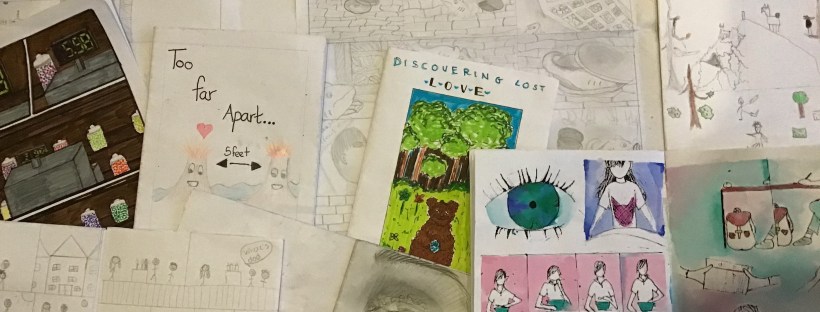
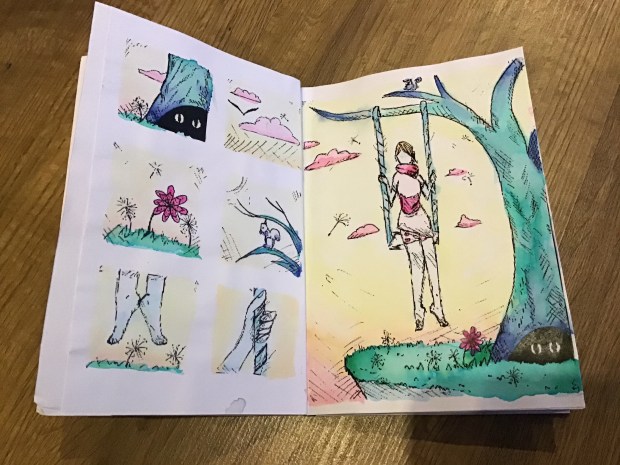
What a lovely pile of marking! Following our study of Shaun Tan’s The Arrival, half of my Year 9 class chose to write stories in which they experimented in words with some of the visual techniques that Tan uses (such as zooming-in), whilst the other half created their own graphic novels. I’m blown away by some of these graphic novels. Here are the opening pages of my favourite:

Guernsey Poems on the Move

At the end of half term I made a quest to Guernsey to see if I could track down two of my poems, which were being displayed on buses as a result of having been selected in the 2019 Poems on the Move competition, judged by Maura Dooley.

Having been given the registration numbers of the buses to look out for, I hoped that all I’d need to do would be to find out which routes they were on and hop on a bus or two to find them. However, it was really disappointing to arrive at the bus information desk, only to find that the two buses in question were both at the depot for servicing, with no possibility of our being allowed to go there to see them.

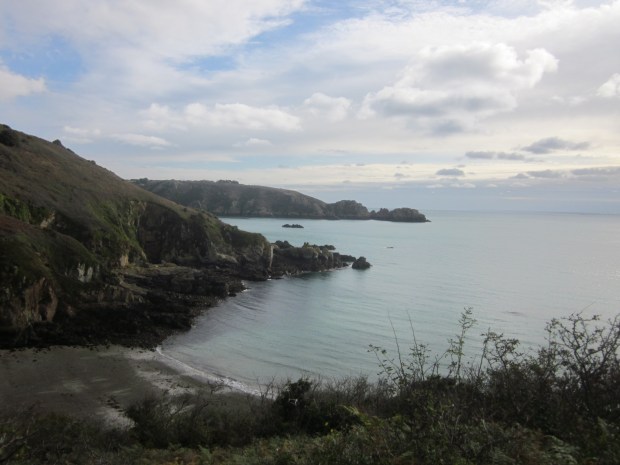
Sunday morning walk to Icart Point

However, this left us with a whole weekend to explore the beautiful island, and we discovered some stunning cliff-top walks. At least I can picture where my poems have found a home, and I have these photos of the poems in situ, taken by CT Plus Guernsey, the local bus company.

I was really hoping to have the opportunity of seeing bus passengers reading the poems; I’m so curious to know what people might make of them. So if anyone reading this post has seen them on the Guernsey buses, I’d love to know! Please drop me a line on Twitter or via the ‘Comments’ section on this website.

At the airport with Sharon Black’s first-prize-winning poem

The Bridport Prize: Highly Commended

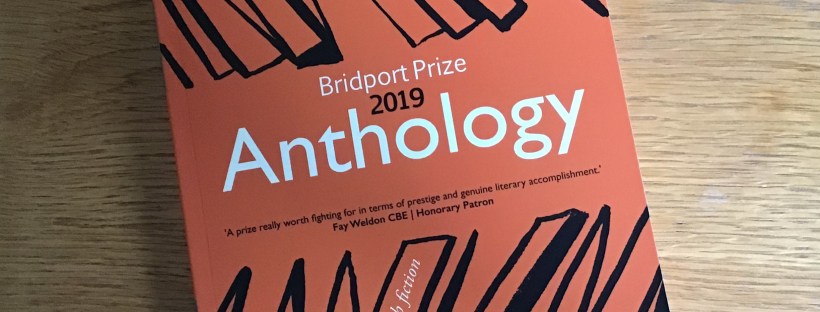
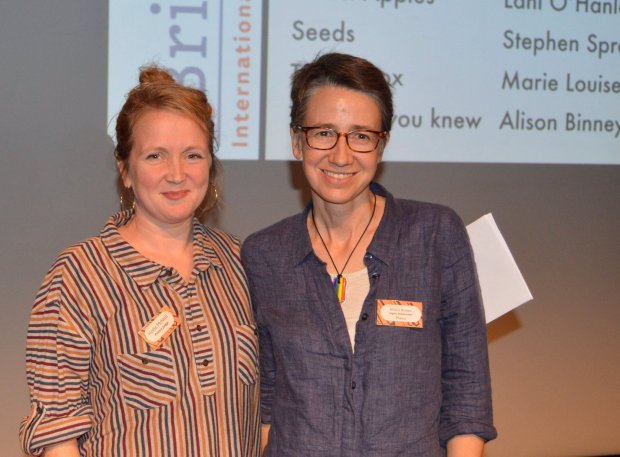
I feel so lucky to have had my poem ‘The way you knew’ Highly Commended in this year’s Bridport Prize, judged by Hollie McNish. It was lovely to meet the other poets over lunch at the Bridport Arts Centre, including 2nd prize winner Jim McElroy, who introduced me to a new word, ‘Hoor’, skilfully deployed as a noun, adjective and verb throughout his stunning poem. The winner, Fathima Zahra, had the entire room hanging on every word of her beautiful, poignant Things I wish I could trade my headscarf for. It was a real privilege to hear all the winners reading their poems, and also to meet Hollie McNish, who has inspired so many of my students to explore poetry for themselves.

The way you knew I fell for when reading it aloud. I felt the rhythms, repetitions and internal rhymes slipped so subtly between pauses came forth more confidently when leashed from the tongue, whilst images such as ‘the way you knew as you chewed how big the next bubble would be’ and ‘even before he began drinking ink’ ensured it would not slip into generalisation.

Hollie McNish, from the Poetry Judge’s Report, Bridport Prize Anthology 2019
With Bridport Prize poetry judge Hollie McNish (Image courtesy of Rachel Brown)

‘The Result is What You See Today’: Poems about Running

It’s exciting to have a poem published in this new anthology from Smith/Doorstop, edited by Paul Deaton, Kim Moore and Ben Wilkinson. It’s fascinating to see how many poets have taken inspiration from running – as well as to read in the biographies how many different reasons people have for doing it. There are poems here about every possible aspect of running, from memories of cross country races at school to Parkruns. The neighbour-poem to mine, People Who Go Running by Joe Caldwell, will make an instant connection with any reader who has a runner in their life: ‘If you live with them, they’ll forget to make dinner / as they’re busy signing up for half marathons / in Clowne and Stamford.’

I wrote my poem, Night Run, last October when the nights were drawing in and I was just starting to have to steel myself to run in the dark again. I hate the prospect of running in the dark, especially after a long day at work, but have never yet regretted a night run once I’ve managed to get myself out of the house. The poem tries to capture that movement from reluctance to exhilaration, which I hope is something that other runners might identify with.

‘The Arrival’ by Shaun Tan

I’m teaching one of my favourite texts with my Year 9 class at the moment – The Arrival by Shaun Tan. It might seem strange to be studying an entirely wordless graphic novel in an English classroom, but I find that it lends itself to a sophisticated level of very close ‘reading’ of each image, and I love the collaborative nature of this as students point things out to each other and explore what they think is going on, with so much left to the reader’s imagination. There’s a wonderful essay on Shaun Tan’s website called Picturebooks: Who are they for? which outlines this process really well. We’re also using The Arrival as a stimulus for creative writing too, learning to apply some of the visual techniques Tan uses, such as zooming out and showing not telling, to our own writing. I’m really looking forward to seeing the graphic novels and stories my students will have produced by the end of the unit.