I have a few events coming up over the next few weeks, if anyone is interested in attending a poetry reading or a writing workshop.
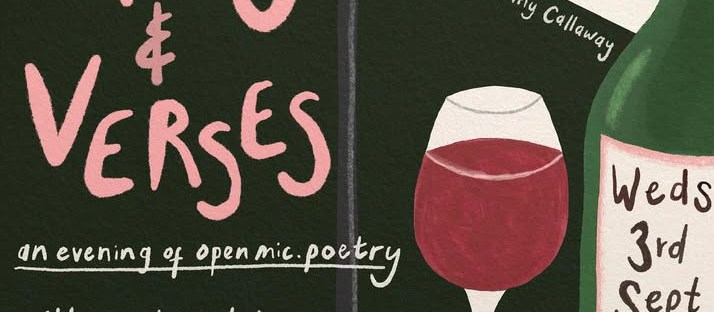
First of all, I’m reading from The Opposite of Swedish Death Cleaning at the new poetry night hosted by Bethany Callaway at Chater’s in Saffron Walden on Wednesday 3rd September. Beth only launched this monthly event in July, but the first two months were sold out, so grab a ticket quickly if you’re interested in coming along in September. I really admire Beth’s tenacity and flair for getting this going so successfully in such a short space of time. There are open mic slots available, and I’ll be doing a 20 minute set before the interval.
On Monday 22nd September from 5pm I’ll be running an online poetry writing workshop on Zoom for the Mslexia Salon called All Over the Place, in which we’ll be exploring a range of ways to generate new poems from fresh encounters with familiar and unfamiliar places.
I’ll be reading at Cambridge’s regular poetry night in the Town and Gown, CB1 Poetry, on Sunday 5th October from 6.30pm.
And finally, I’m headlining the lovely Fen Speak at Centre E Community Hub in Ely on Thursday 16th October from 7.30pm, with two poetry sets alongside a range of wonderful open-miccers.
Do get in touch via my contact form if you’d be interested in booking me for a poetry reading or writing workshop from November onwards.
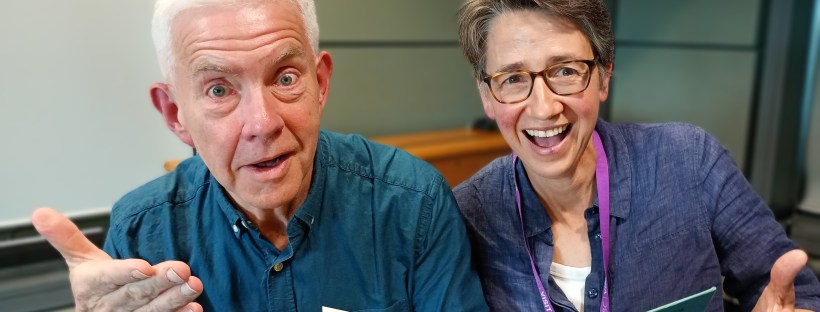
It was a dream come true to have the opportunity to read and talk about three poems from The Opposite of Swedish Death Cleaningon BBC Radio 4’s The Verb, hosted by Ian McMillan, and alongside guests Fiona Benson, Boo Hewerdine and Yvonne Lyon.
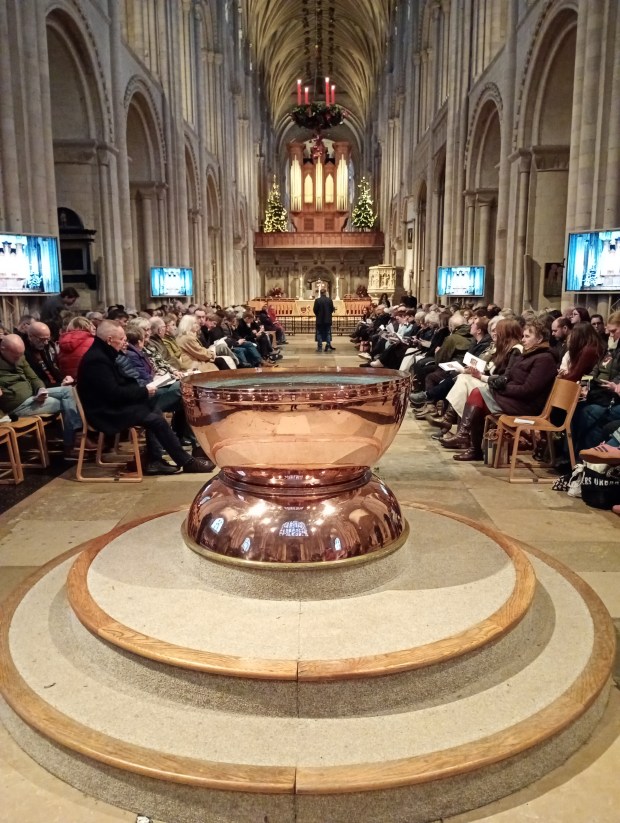
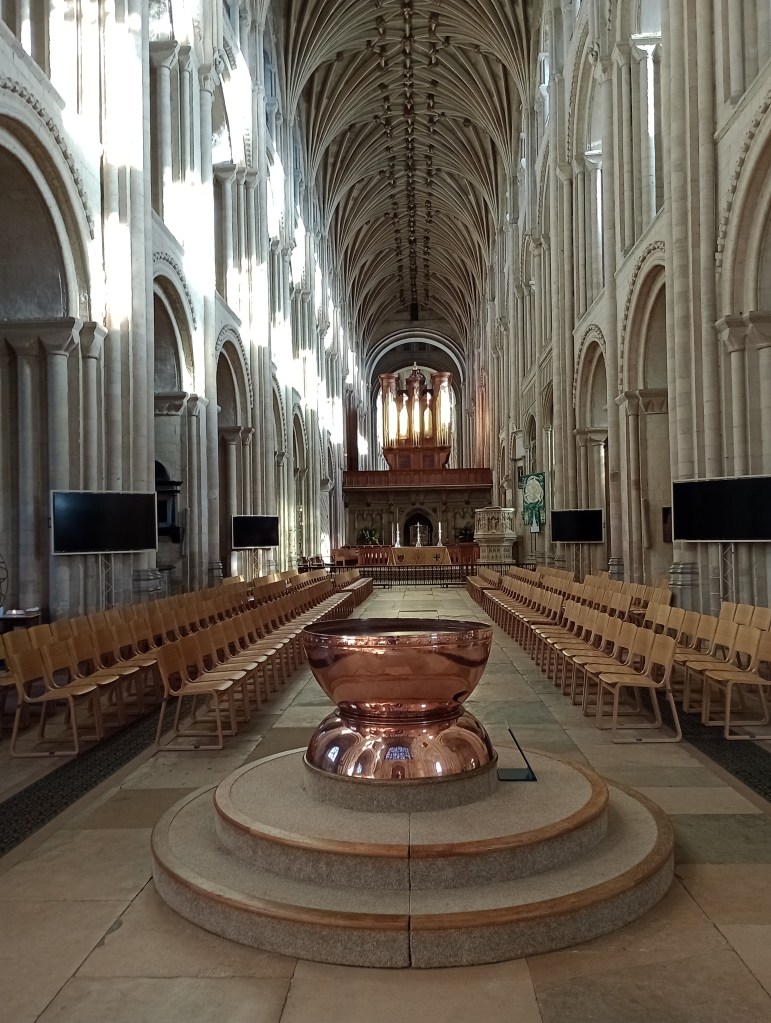
Although the focus of my segment was on writing about a parent with dementia – something that felt particularly poignant given that the programme was aired on Fathers’ Day – I was really glad that Ian had selected Muscle Memory for me to read and discuss, as it’s a reminder of the moments of joy that can still be found even amidst so much loss. Here’s a photo of the beautiful copper font in Norwich Cathedral ‘that stretched our faces like toffee’ – an allusion to the fact that it was donated when the Rowntree’s chocolate factory closed down, having previously been used to melt toffee.
I love Fiona Benson’s collection Midden Witch, so it was brilliant to hear her talking about the stories behind some of these poems, like The Witch of Easington and Jenny Greenteeth. Some of my favourite poems in this collection are those inspired by birds and animals, and it’s fascinating to see how placing them in a section entitled ‘Familiars’ curiously shifts the reader’s perspective on creatures such as bowerbirds and snails.
Boo Hewerdine and Yvonne Lyon’s songs about things that fall out of books tied the whole show together, and it was spine-tingling to hear their music up close in the studio. I was so touched that Boo set a line from Inside the House of Delirium to music: ‘The curtains sleep until midday’.
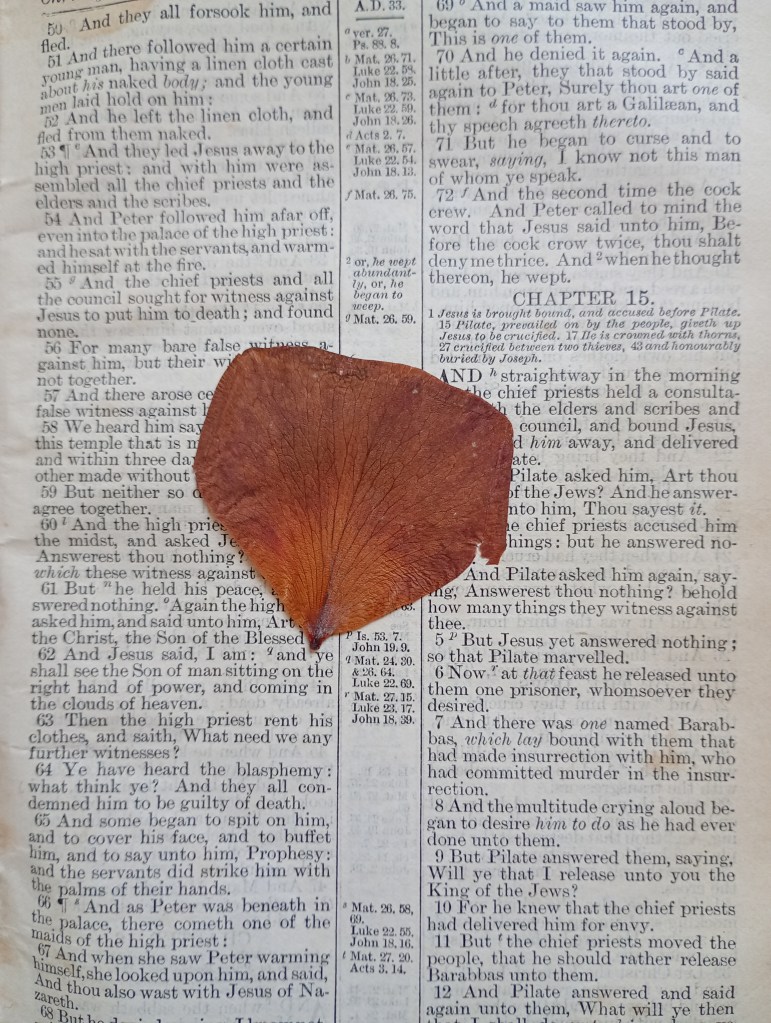
If we’d had more time, I would have shared this poppy petal that fell out of my great grandmother’s Bible, which she used as a flower press. It’s incredible to think that it must have been flowering in a Cornish hedgerow in the 1880s.
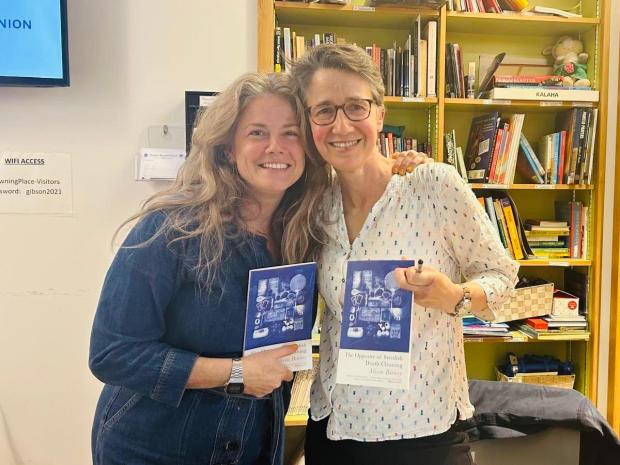
It was lovely to celebrate the publication of ‘The Opposite of Swedish Death Cleaning’ on Friday 16th May at Downing Place United Reformed Church. There were people there from various different parts of my life: teaching friends, rowing friends, church members, friends I was at school with, members of the U3A contemporary poetry group I’ve led sessions with, and walking friends, as well as members of my family.
It was a particular honour to have Kate Winter there, the artist who designed the stunning cover for both this poetry collection and my pamphlet, ‘Other Women’s Kitchens’.
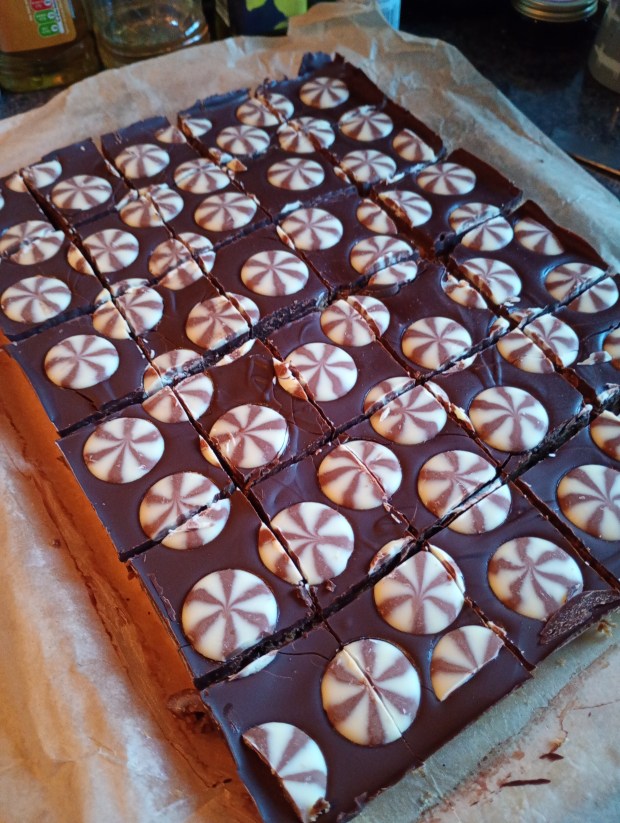
The launch was accompanied by a huge batch of chocolate fridge cake, made by my partner Emily to my grandmother’s recipe, which is handwritten in the recipe book that appears in the top left hand corner of the cover.
I have a series of other launch events lined up over the next few months, and would be delighted to see people there. Here are the details:
I’m also very open to invitations to read at other events, so do drop me a line via the ‘Contact’ section on this website if you would like to make a booking.
When I first tried out Other Women’s Kitchens as a title for my debut poetry pamphlet, I was surprised to find how many of the poems in it are set in kitchens, or makeshift kitchens. I continue to draw on kitchens for inspiration in my writing, particularly in some of the recent poems that have arisen from the experience of sorting and clearing my parents’ house.
Some of my favourite poems by other poets are set in or around kitchens. I think of Seamus Heaney’s sonnet about peeling potatoes with his mother, for example, Mary Jean Chan’s They Would Have All That, and Alison Brackenbury’s collection Aunt Margaret’s Pudding, inspired by her grandmother’s recipes.
For me, kitchens, more than anywhere else, are the spaces where important things happen. Eating is both a primal need, and something that can be sophisticated and elaborate, such as cooking for a date or a dinner party. Cooking and eating are ritualistic acts, both in the everyday repetitions of making cups of tea or bowls of porridge, and also in the less frequent but perhaps more highly-charged rituals of Christmas, Thanksgiving, Shabbat, Iftar. Food is nourishment, treat, discipline, spectacle, connection, tradition, symbol, sacrament. And kitchens are places where we gather to eat and to cook intergenerationally, with all of that passing-on, both implicit and explicit, that takes place when we do those things with others.
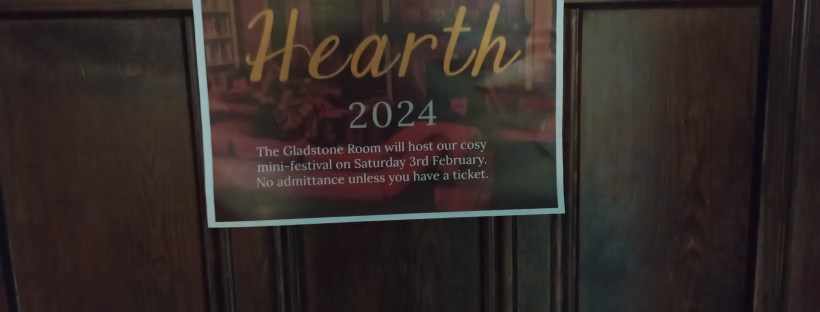
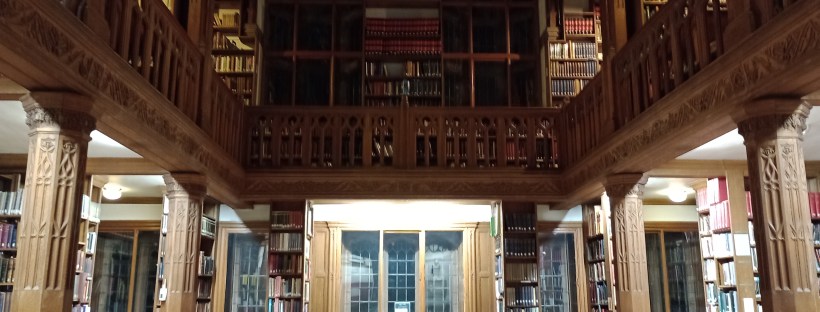
So it was strange to give a talk entitled ‘A Kitchen of One’s Own’ at Hearth 2024, while staying in the wonderfully congenial environment of Gladstone’s Library, where three delicious meals a day were cooked for me in the Food for Thought cafe. There, not only did I not need to cook – a sign saying ‘Strictly Staff Only’ kept me banned from the kitchen for three days.
As lovely as it is to be cooked for, it’s fascinating what that does to the rhythm of life. Days feel much longer when you don’t need to shop, plan meals, cook or wash up. But it also makes me feel somehow wrong-footed when that rhythm is suddenly removed.
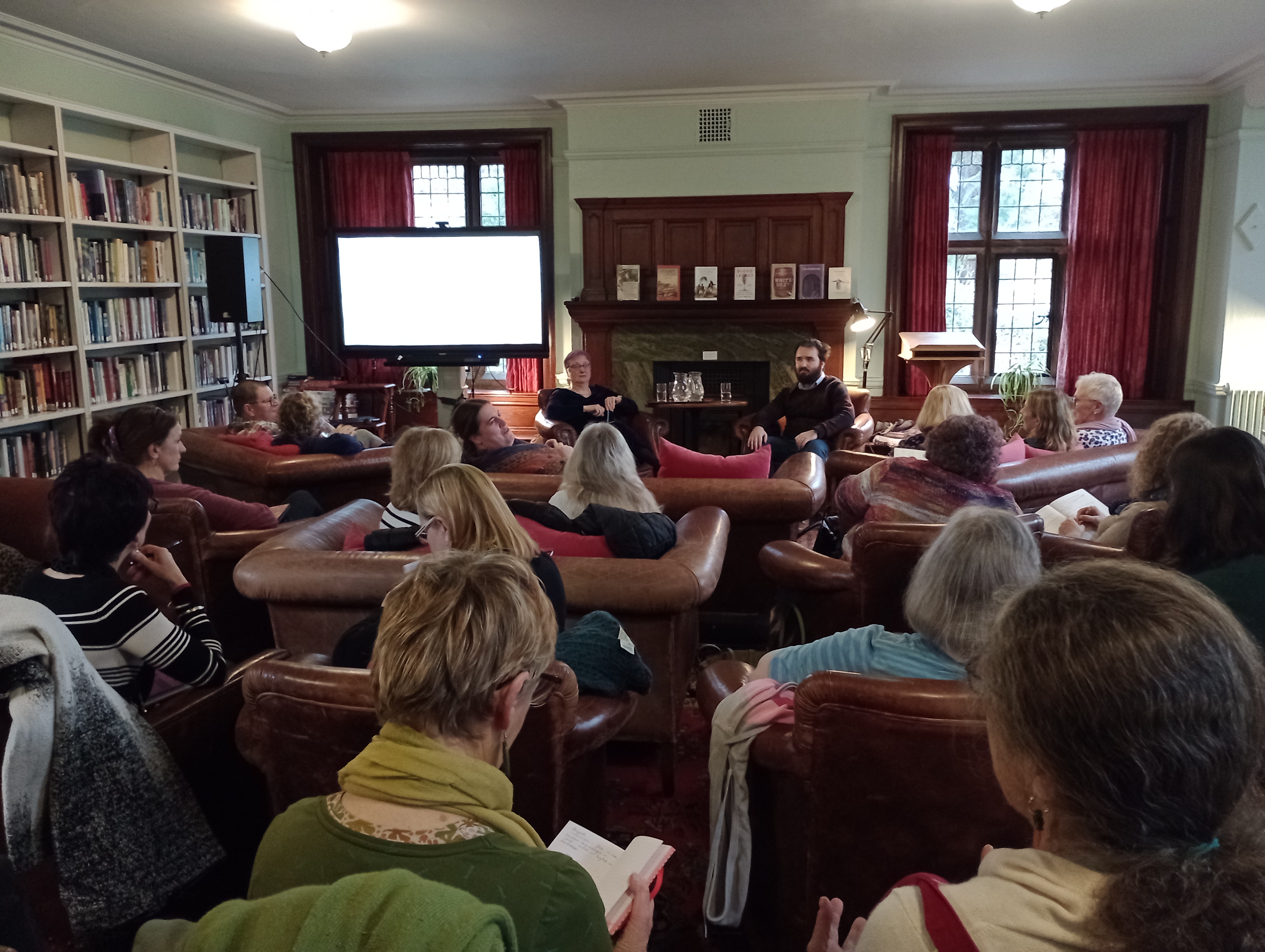
That observation proved a helpful starting-point for my talk at Hearth, the annual mini-festival at Gladstone’s Library, which was a lovely event to speak at, with the talks taking place in the intimate setting of a lounge filled with comfy leather sofas. After my talk, I thoroughly enjoyed listening to the other speakers – Eleanor Wasserberg, Frederick Bricknell and Louise Gray. Although on paper it was hard to anticipate how our four talks might work together, it was fascinating to see common themes emerging and developing throughout the day: the challenge of listening to undocumented voices; the sharing of family history; the dilemmas around sourcing and eating particular foods. The audience – warm, receptive, astute – played a huge part in helping those threads to emerge, and in enabling the conversations to continue over lunch and dinner.
I’m so grateful to the team at Gladstone’s Library for the privilege of speaking at Hearth, and for the wonderful hospitality, organisation and welcome. I will definitely be back, and I’m looking forward to it already.