Two events at Gladstone’s Library in May

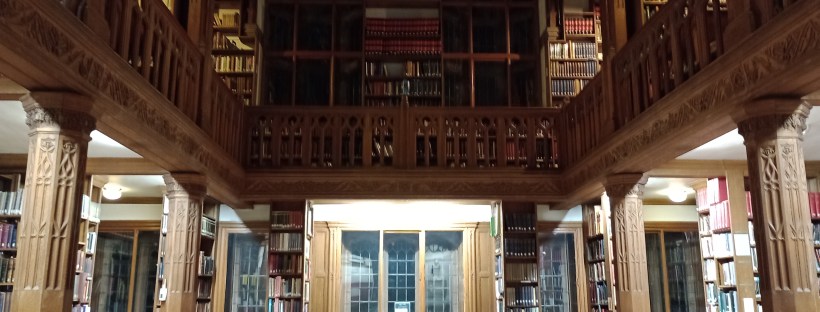
I’m delighted to share that I will be spending the whole of May 2026 on a writing residency at Gladstone’s Library in Hawarden. It will be such a privilege to be able to live and write in such beautiful surroundings, and I feel very fortunate to be able to take a whole month away from teaching in order to focus on my work in progress, Chosen Sisters, which is a poetry collection exploring the lives of women from the past who lived in intimate relationships with other women – or wanted to. (It’s what I call my ‘dead lesbians’ project when I’m chatting to friends about it!)

During my residency I’ll be leading two events for which tickets are now available. On the evening of Tuesday 12th May at 7pm I’ll be giving a reading from my debut poetry collection, The Opposite of Swedish Death Cleaning, and also talking about and reading poems from my work in progress, Chosen Sisters, which picks up the thread of honouring the past, in all its messy complexity. I’ll share poems about female doctors, philanthropists, footballers and gardeners, in each case discussing how the poems were researched and written, and finishing on what is likely to be a first at Gladstone’s Library: a ballad about a pair of eighteenth century lesbian pirates. 
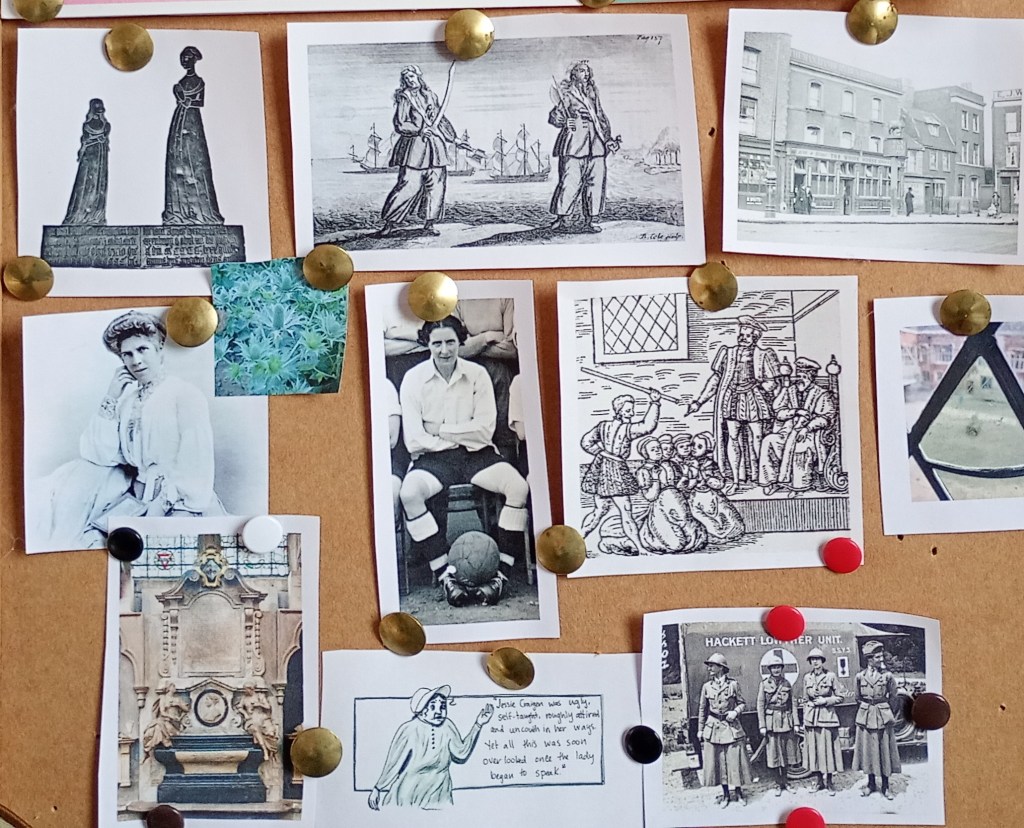
Every time I add a poem to Chosen Sisters I pin an image to this noticeboard beside my desk

Tickets cost £18 for the reading, or £38 for the reading plus a pre-event two course dinner in the Food for Thought restaurant, and can be purchased from the Gladstone’s Library website here.

Then on Saturday 23rd May I’ll be running a poetry-writing masterclass from 10.30am to 3pm entitled Ghost-Whispering. In it, I’ll be asking participants to think about the voices of women from the past. What are they saying? Why are they saying it? How are they saying it? What are others saying about them? How might their voices speak to our lives today?

The poems in Chosen Sisters are inspired by historical evidence from a range of sources: court reports, monuments, handbills, photographs, graffiti etched on a window. In this masterclass I will share early drafts and final versions of poems that have been crafted in this way, showing how I have used historical artefacts to try to listen carefully to the voices of women from the past.

I will then provide a range of historical artefacts for participants to work with during the workshop, encouraging people to listen to what these artefacts might be whispering to them, and to use some of the approaches demonstrated – creating found poetry, writing ekphrastic poetry, echoing aspects of poetic form – to craft their own poems inspired by historical sources.

The day will finish with an opportunity for participants to share and workshop new poems.

Tickets for this masterclass cost £70, and that includes tea and filter coffee during refreshment breaks, plus a two-course lunch in the Food for Thought restaurant. They can be purchased here.

I’m very much looking forward to both of these events, and hope that people will be inspired to come along.
Family Lines

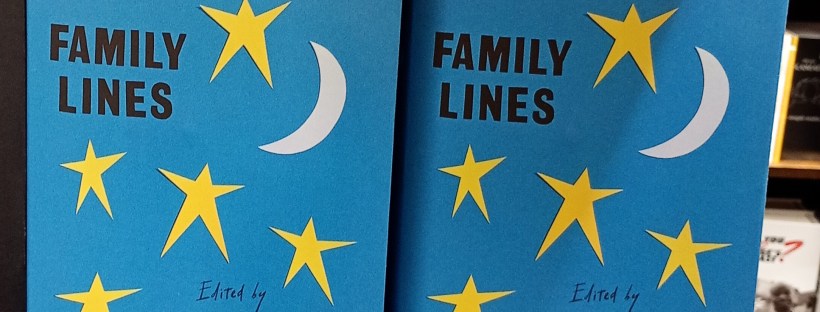
I’m delighted to have a poem published in a new Faber anthology, Family Lines, edited by Simon Armitage and Rachel Bower. It’s Muscle Memory, a poem inspired by a Christmas Eve service in Norwich Cathedral which I took my Dad to not long after he had moved into a care home.

My Dad has always loved Christmas, and Norwich Cathedral has been a particularly special place for him ever since he first moved to Norwich in 1970, so I felt that the afternoon service on Christmas Eve might be something that he would still enjoy, despite the progression of his Alzheimer’s disease. That very much proved to be the case, and it was incredible to see the power of both music and muscle memory, as the organ played the introduction to each carol and he was able to push himself up to stand and sing, with an ease that had otherwise seemed lost to him.

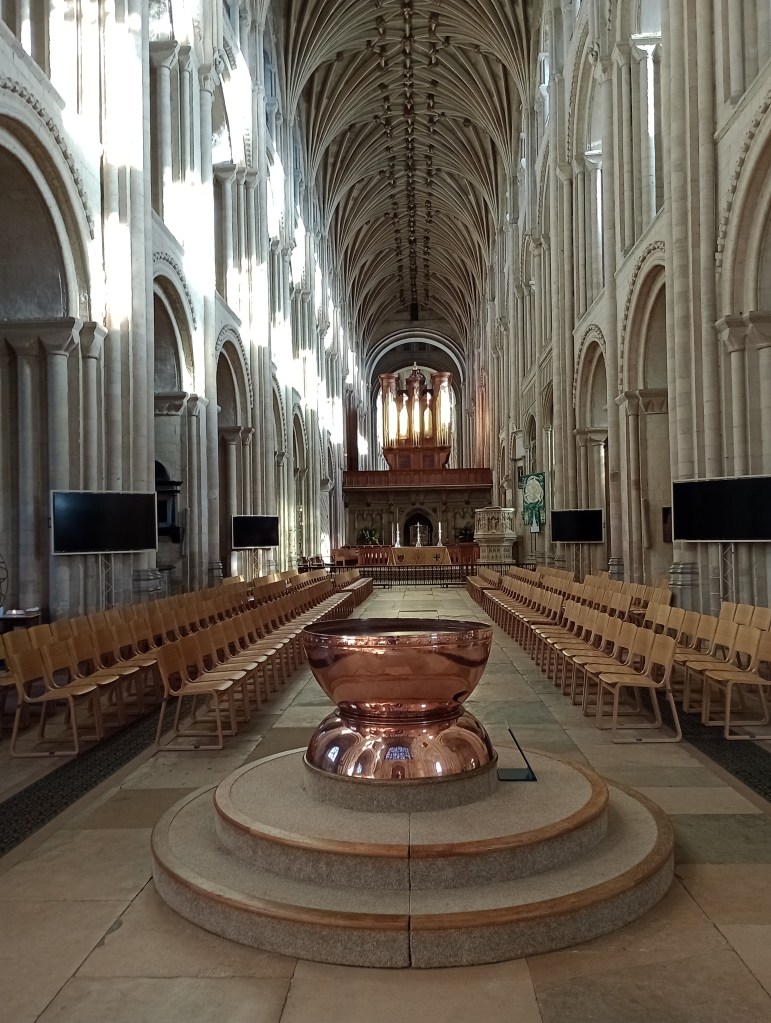
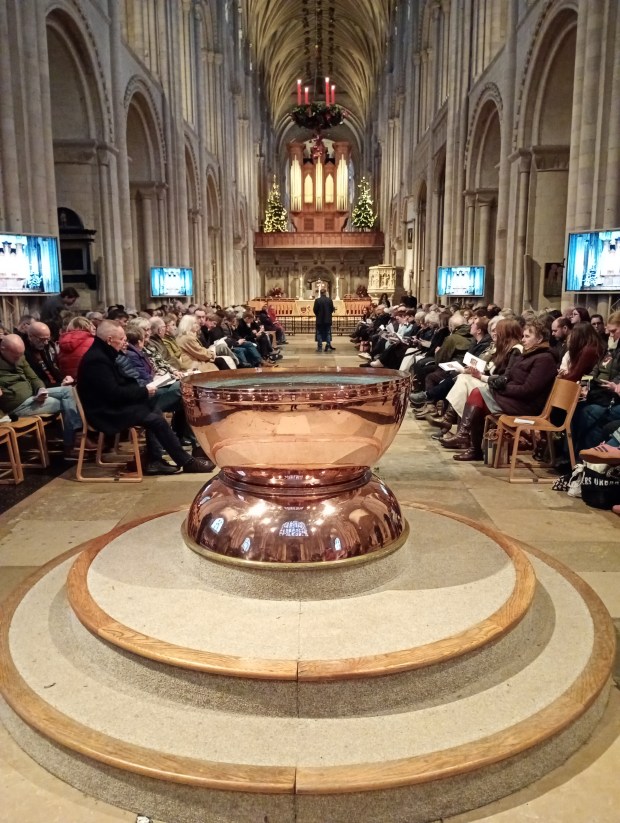
One of my favourite features of Norwich Cathedral is its copper font, which was previously used to melt toffee at the Rowntree’s chocolate factory, and which stands in the west end of the nave. At the end of the Christmas Eve service the choir processes to this end, where we were sitting that year, and the huge west doors are opened. I wanted to end my poem there because this is such an awe-inspiring moment in the service, and also because it’s a reference to a poem my Dad wrote many years ago, inspired by the Christmas Eve service at King’s College Chapel, Cambridge. You can hear me explaining this ‘secret reference’ in an episode of The Verb on Radio 4, broadcast on 15th June 2025.

Muscle Memory is one of the poems in my debut collection, The Opposite of Swedish Death Cleaning, published by Seren Books.

Family Lines is available in bookshops and on the Faber website. It’s a wonderful, varied collection and would make an excellent gift. I think that my Dad would be delighted that the final poem in it is Heredity by Thomas Hardy, one of his favourite poems.

Fathers, witches and things that fall out of books: The Verb, with Ian McMillan

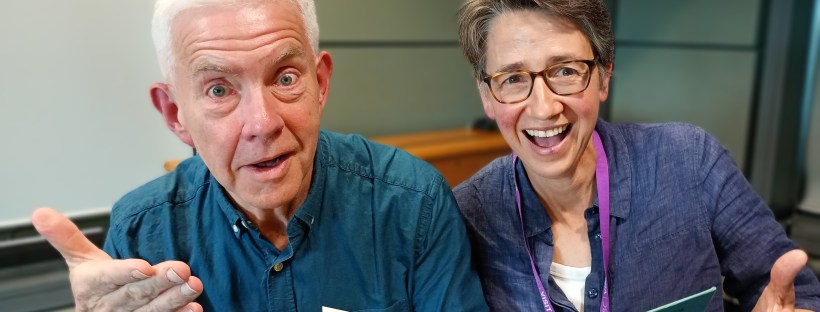
It was a dream come true to have the opportunity to read and talk about three poems from The Opposite of Swedish Death Cleaning on BBC Radio 4’s The Verb, hosted by Ian McMillan, and alongside guests Fiona Benson, Boo Hewerdine and Yvonne Lyon.

The show is available on BBC Sounds, and also as a podcast.

Although the focus of my segment was on writing about a parent with dementia – something that felt particularly poignant given that the programme was aired on Fathers’ Day – I was really glad that Ian had selected Muscle Memory for me to read and discuss, as it’s a reminder of the moments of joy that can still be found even amidst so much loss. Here’s a photo of the beautiful copper font in Norwich Cathedral ‘that stretched our faces like toffee’ – an allusion to the fact that it was donated when the Rowntree’s chocolate factory closed down, having previously been used to melt toffee.

I love Fiona Benson’s collection Midden Witch, so it was brilliant to hear her talking about the stories behind some of these poems, like The Witch of Easington and Jenny Greenteeth. Some of my favourite poems in this collection are those inspired by birds and animals, and it’s fascinating to see how placing them in a section entitled ‘Familiars’ curiously shifts the reader’s perspective on creatures such as bowerbirds and snails.

Boo Hewerdine and Yvonne Lyon’s songs about things that fall out of books tied the whole show together, and it was spine-tingling to hear their music up close in the studio. I was so touched that Boo set a line from Inside the House of Delirium to music: ‘The curtains sleep until midday’.

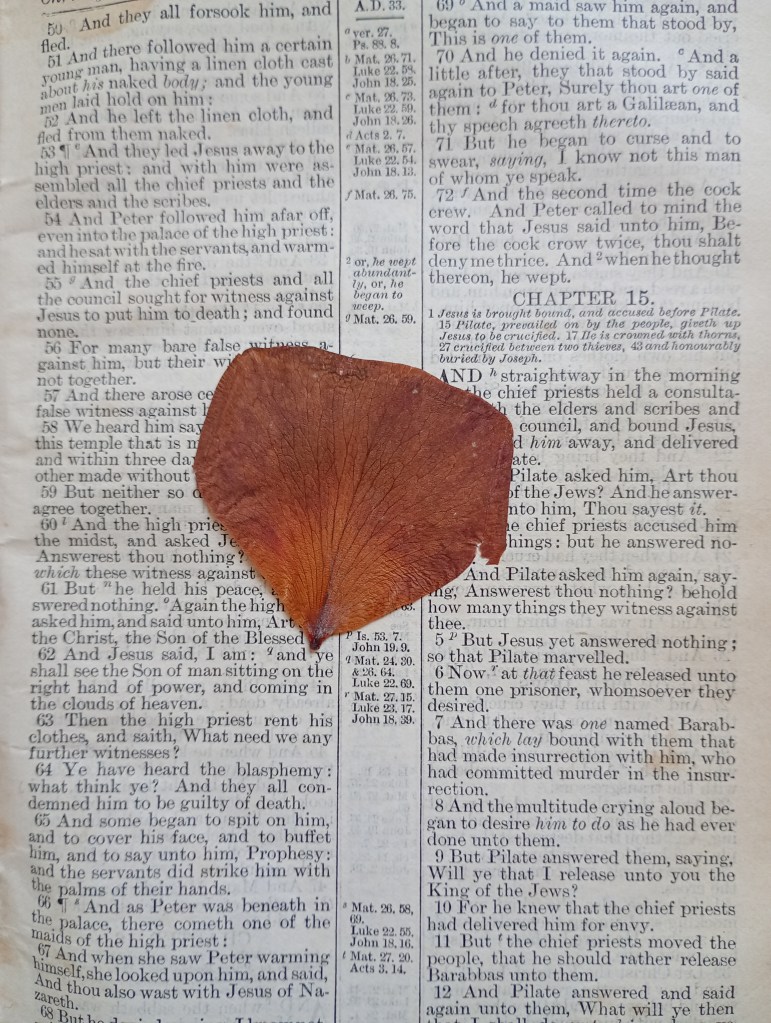
If we’d had more time, I would have shared this poppy petal that fell out of my great grandmother’s Bible, which she used as a flower press. It’s incredible to think that it must have been flowering in a Cornish hedgerow in the 1880s.