Out and wild

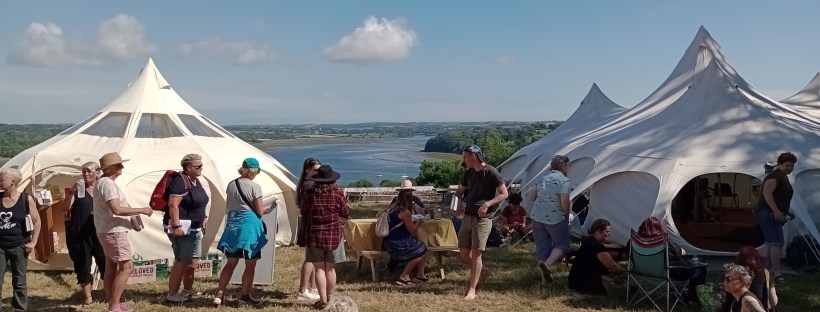
It was a lovely treat to be invited to read at the Out and Wild Festival earlier in June. In just its second year, Out and Wild is a wellness festival aimed at LGBTQ+ women which takes place in the beautiful coastal setting of Lawrenny, in south west Wales.

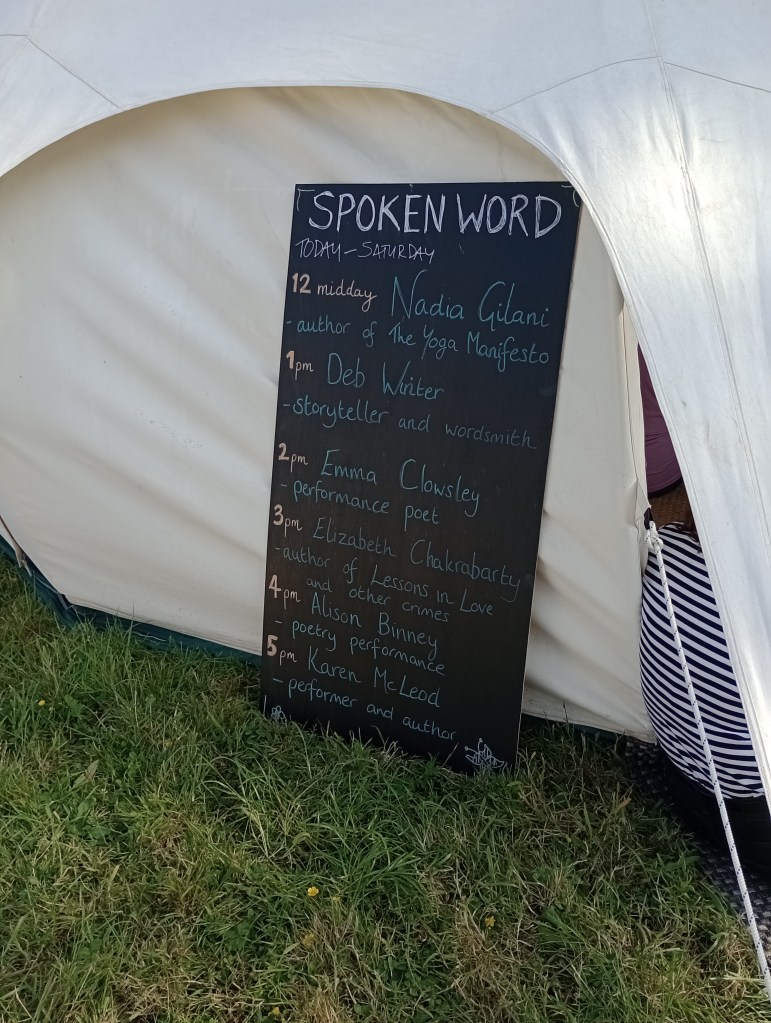
The Spoken Word tent was a cosy oasis of bean bags and benches, with a stunning view over the estuary through the back. I don’t think I’ll ever do a reading with a better view! The space created an intimate, friendly feeling for all the readers, and I particularly enjoyed the performance by storyteller Deb Winter earlier in the afternoon.

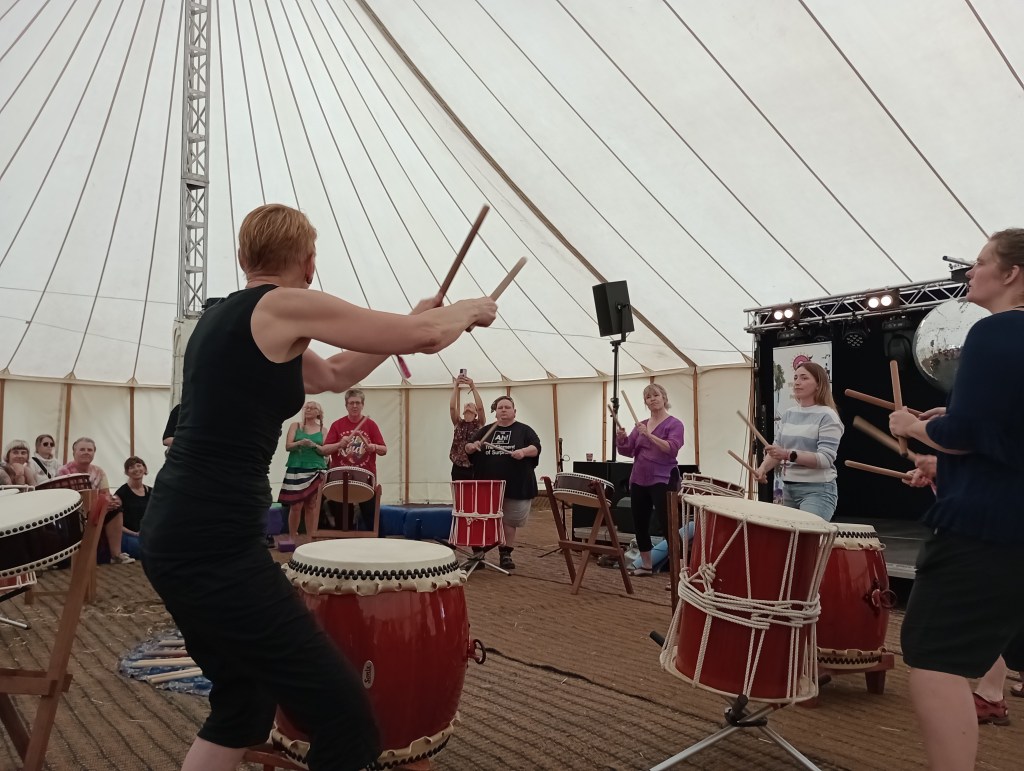
I made the most of the rest of the festival too, experiencing Taiko Drumming, Forest Bathing and a Silent Disco for the first time.

Given that the festival focused on LGBTQ+ women, it was a great space for reading some of the poems from Other Women’s Kitchens, and I really appreciated chatting to several women afterwards about how the poems resonated with their experiences. It was also good to try out some new poems on an audience for the first time.

With just 700 people there, the whole festival had a really friendly vibe, and it was good to keep bumping into the same people at different activities. I’m really looking forward to going back!

Wave of Nostalgia, Haworth

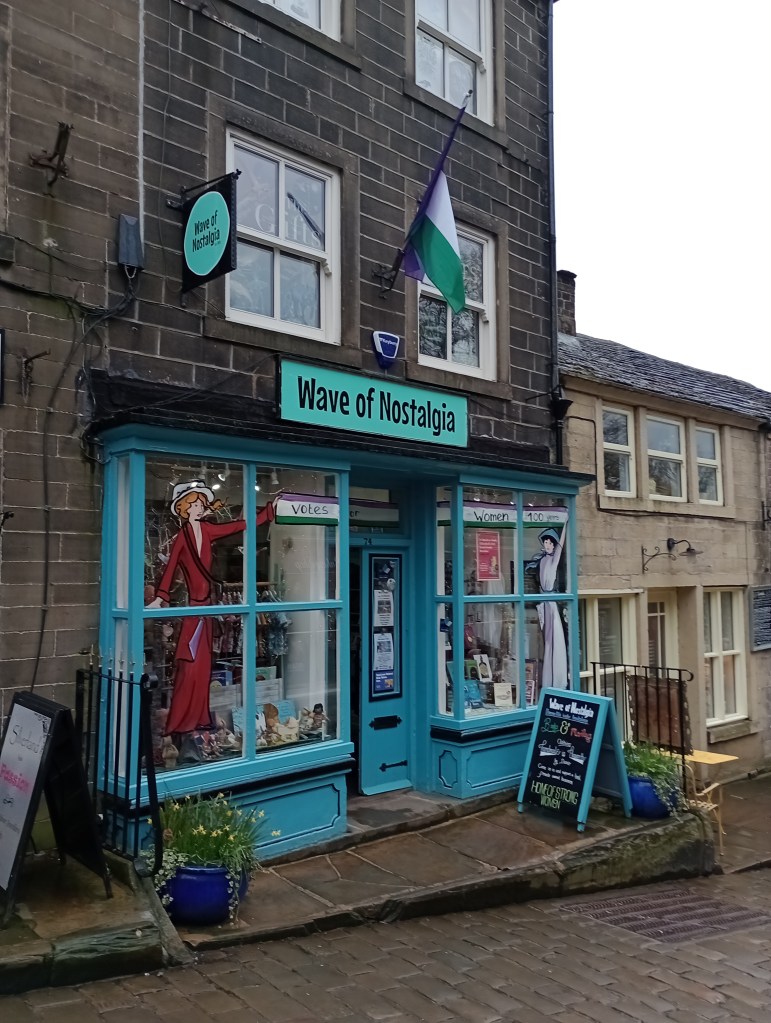
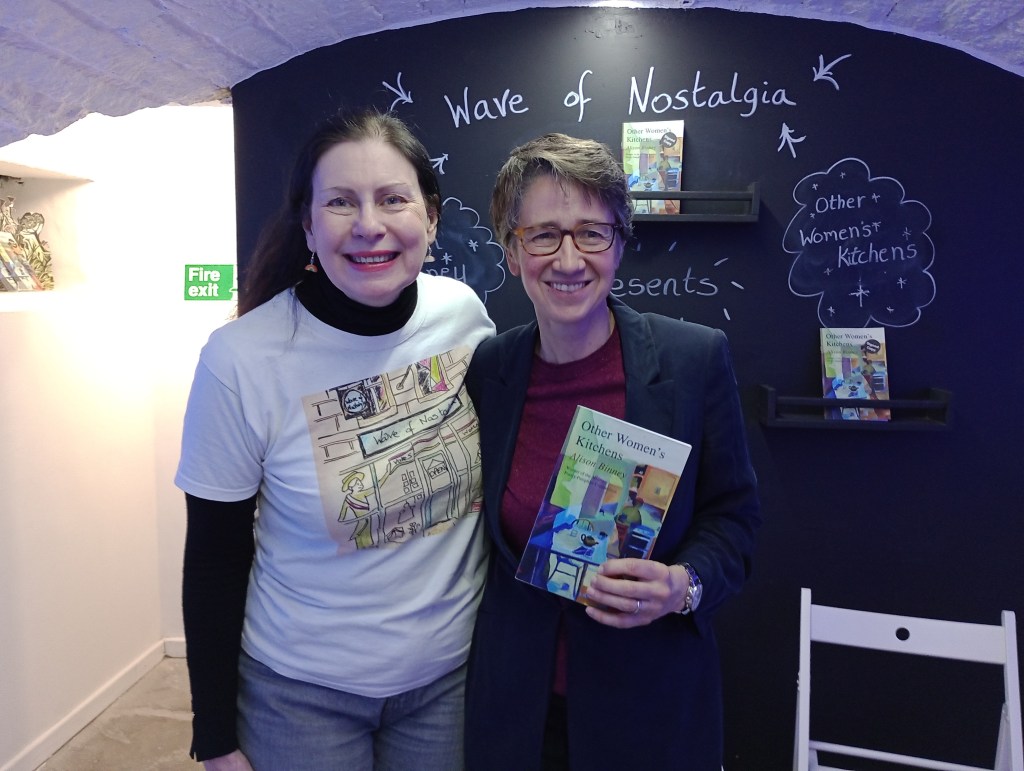
Last February, whilst on a walking holiday in Haworth with Her on a Hill, I discovered Wave of Nostalgia, a wonderful independent bookshop which specialises in books by and about strong women. I dropped off a copy of ‘Other Women’s Kitchens’ in the hope that the shop might be willing to stock it, and by the time I got home from the holiday I’d received an email asking for twelve signed copies, and proposing that I go back to do a reading.

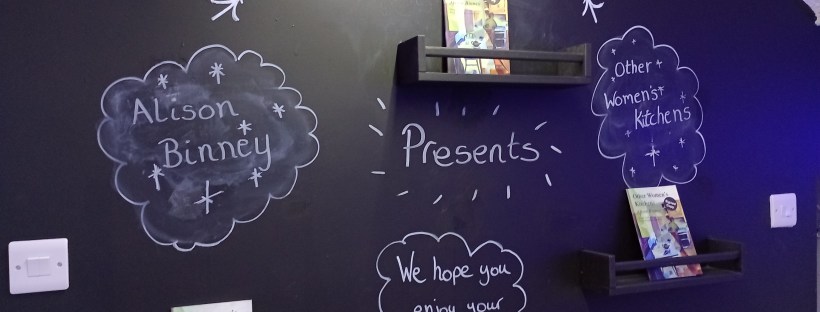
Diane Park, the bookshop owner, has created an amazing performance space in the cellar underneath her shop, and it was a delight to be there in the first week of April, reading from ‘Other Women’s Kitchens’, plus some more recent poems, for a really engaged, receptive audience.

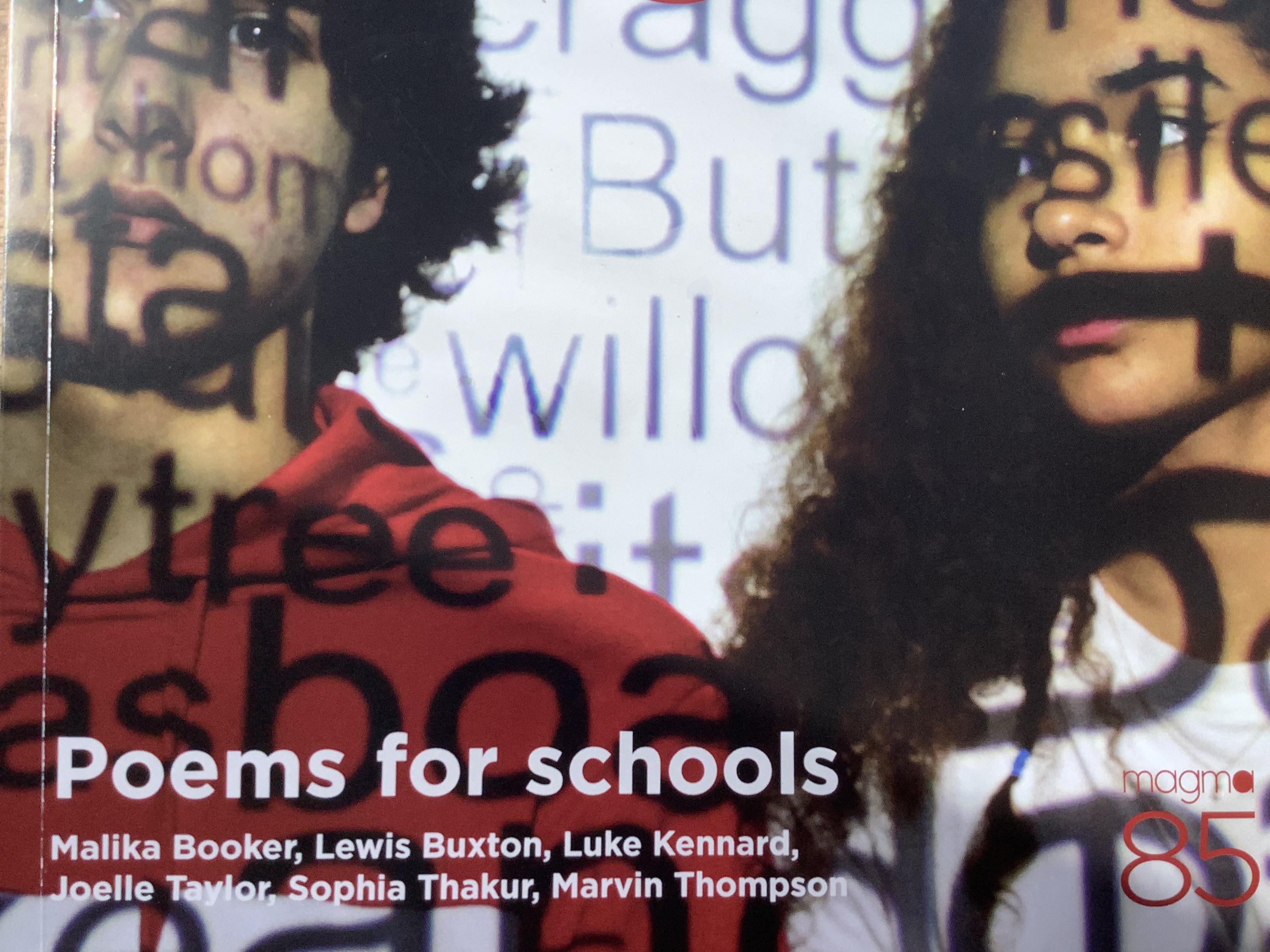
Magma 85: Poems for Schools – Selected Poet

I’m honoured to have been chosen as the Selected Poet for Issue 85 of Magma, especially because the theme of this issue is ‘Poems for Schools’. Copies of this issue have been sent to all the GCSE exam boards in an effort to tempt them to widen the range of poems and poets included in future English Literature anthologies.

In my long experience of teaching GCSE classes, there’s no particular formula for poems that 14-16 year-olds will enjoy reading and exploring. Teaching English would be very dull if that were the case. I’m impatient with lazy assumptions, such as that 21st century teenagers have no appetite for poems about nature, for example, or that they only want to read about issues that directly reflect their lives. I’ve witnessed students’ passionate reactions against the protagonist in ‘Hawk Roosting’ – ‘I hate that bird. He thinks he’s all that, but he aint!’ – and equally engaged conversations about the attitudes towards women suggested by the speaker in ‘She Walks in Beauty’, and the extent to which they’re still evident today. Good teaching, of the sort outlined by Barbara Bleiman in her excellent article in this issue, is, of course, the crucial factor in supporting students in their exploration of poetry and whetting their enthusiasm.

However, the GCSE poetry anthologies are long overdue an overhaul, beginning with a challenge to Michael Gove’s fixation with Romantic poetry, as if that era somehow represented the pinnacle of poetry written in English, and it’s been downhill ever since. The poems in this edition of Magma represent a much broader and more invigorating range of poets, themes and poetic forms, and I’ve already found many that I’d love to teach.

Recordings of my six poems from Issue 85 can be found here. If you’re an English teacher and you try any of these poems in your classroom, I’d love to hear about what you do with them and how your students respond.

On perseverance and publication

Things move slowly in the poetry world – especially compared to my day job in the classroom, where things generally feel as if they’re moving on fast forward. It’s sometimes frustrating, but it’s a rhythm I’m learning to get used to. And since I started submitting poems to literary magazines a few years ago, I’ve also had to get used to my fair share, not only of seemingly interminable waiting, but also of rejection at the end of it. It goes with the territory, but it’s still hard sometimes not to take it personally, or to catastrophise, especially when a flurry of rejections comes together.

One of the most valuable lessons I’ve learned from other poets is to swallow my pride and to resubmit to journals that have rejected me. Not the same poems, but different ones – hopefully better ones. And often, in the time between being rejected and the next submissions window, there’s a better poem waiting in the wings, and I’m almost glad that the earlier poem didn’t make the cut.

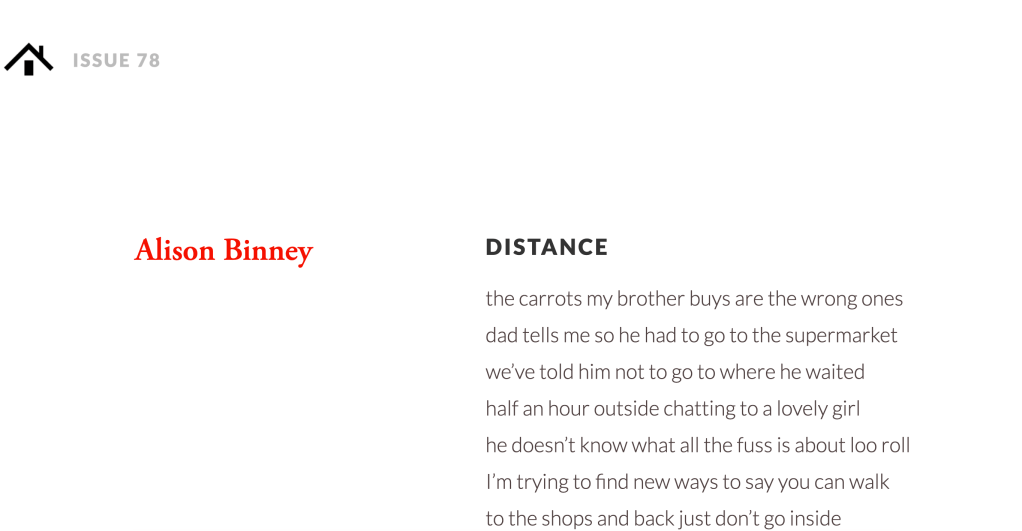
Perhaps the most extreme example of this for me is my experience with ‘The Interpreter’s House’ – a magazine I first started submitting to in the autumn of 2018, and which I regard very highly for the quality of the poems it publishes, as well as the way the editors promote these poems on social media. My first submission to ‘The Interpreter’s House’ was aspirational, and I wasn’t surprised to be rejected. I submitted again, and was again rejected, but this time with a note saying I was ‘warmly encouraged’ to send more. By then I knew enough to take this encouragement seriously. I submitted again. And again. And again. Three more rejections, with no notes. And then I submitted again, and received further encouragement to send more. I felt I was inching closer. And again – this time ‘We discussed your poem at length’. Yay! And then finally, this summer, an email saying that the editors would like to publish one of the poems I had sent in my latest submission, if I would be open to an editorial discussion about the ending.

I was thrilled to have finally made it – almost – and was delighted to have the opportunity for a chat about how the poem might end, which resulted in an editorial suggestion which I’m really happy with.

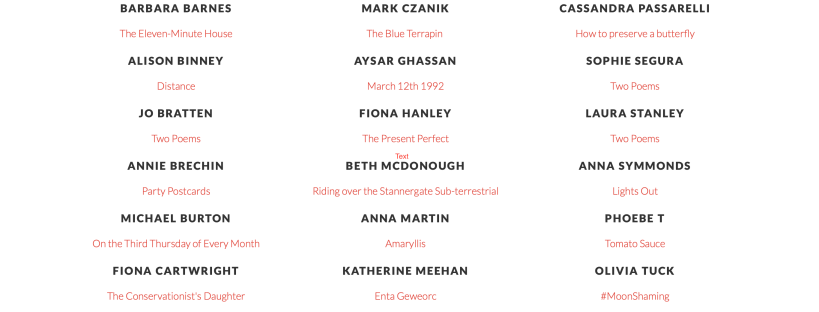
I’m so grateful to the editors, Georgi Gill and Louise Peterkin, for their faith in this poem, and for their encouragement with my previous unsuccessful submissions. Thanks also to all those poets who’ve also shared their stories of rejection and perseverance, which have given me the confidence and determination to keep going.

You can read my poem, ‘Distance’, here, but do have a browse of all the other poems in Issue 78 too.

The Ginkgo Prize for Ecopoetry 2022: Straight-line mission

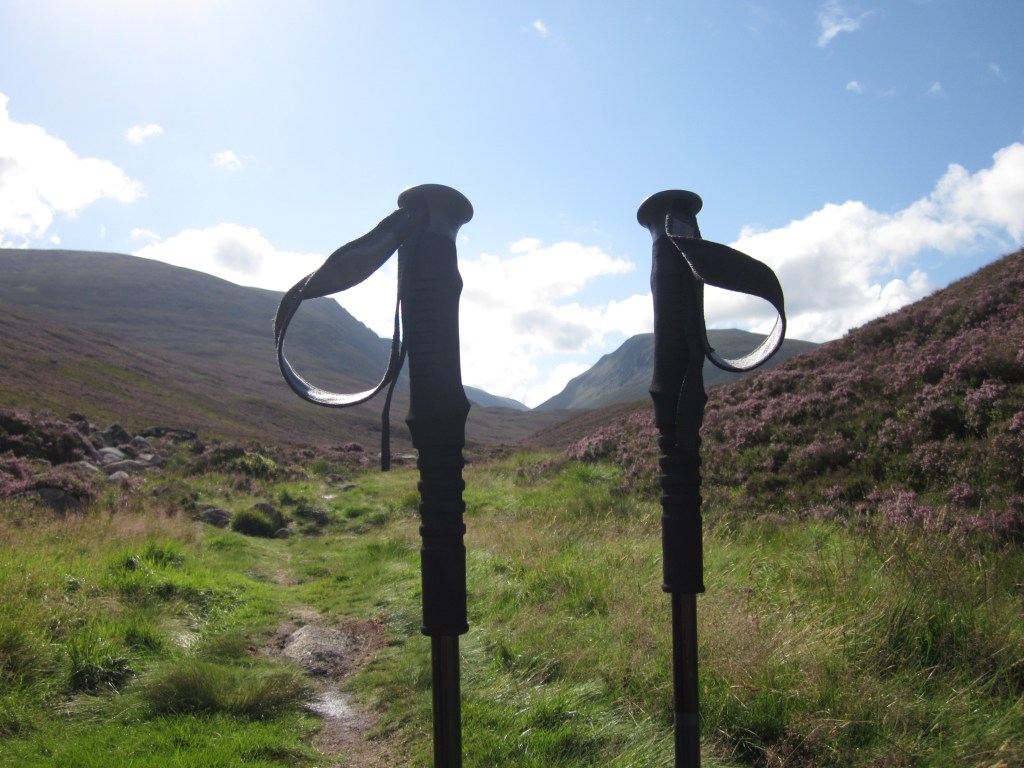
On 30th September 2021 a pair of hikers became the first people to walk the longest straight line in the UK without crossing a paved road, after spending four days crossing 78.55km (48.8 miles) from the Pass of Drumochter to Corgarff in north Scotland. Their route passed through the Cairngorms National Park, which is home to 25% of the UK’s most endangered species.

I’m a keen walker and love the challenge of a long hike through beautiful scenery. But I read about this ‘straight-line mission’ with a mixture of respect and horror. The 18th century garden designer William Kent famously said, ‘Nature abhors a straight line’, and I think that helps to explain why I found the whole concept of this walking challenge rather chilling. There are good reasons why footpaths rarely follow straight lines, something I’ve reflected on previously in my poem ‘Desire lines‘. When I discovered how many endangered species have a home in the Cairngorms National Park, I wondered how many nesting sites the walkers might have waded through, and worried about the impact on other ecologically valuable environments if straight-line missions become more popular.

I decided to explore all of this in a poem, and after trying various formats I elected to superimpose the reasons the walkers had given for completing this mission over the top of a list of the endangered species that inhabit the Cairngorms, presenting the walkers’ justification in bolder type and with justified edges to represent the way in which their mission had passed directly over the various creatures’ natural habitat. The fact that this piece of text is about the length and width of a ruler seems to fit the calculatedness of this mission.

In composing the background list poem, I was particularly struck by the beauty of the names of so many of these species, such as ‘shining guest ant’, ‘northern silver stiletto fly’, ‘Kentish glory’, and ‘aspen hoverfly’. There were many species here that I had never heard of, so I hoped that listing them in this poem would be a way of drawing attention to the need to preserve and protect them.

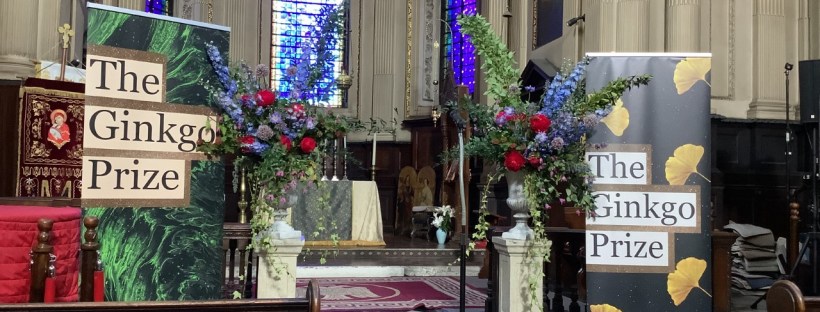
I am delighted to say that the resulting poem, ‘Straight-line mission’, was Highly Commended in this year’s Ginkgo Prize for Ecopoetry, and appears in the competition anthology here, on page 17.

It was lovely to be able to go to the prize giving ceremony in London on Monday, and to hear the winning poems read aloud. I have been haunted ever since by the final lines of the 2nd and 3rd placed poems. Liz Byrne’s ‘An owl the size of my smallest fingernail’ imagines the speaker holding a tiny owl in her palm and finishes:

‘He is mine. I can do what I want; so small,
no-one will ever miss him.’

Hilary Menos reflects on the speaker’s ambivalent relationship with her friend’s environmental activism, but memorably ends:

‘the only one of us prepared to give your real name,
the only one to own up to the mess we’d made.’

It was a privilege to hear these poems read aloud by their writers, and just so lovely to be able to attend an in-person poetry event again.

Heeling in at Lower Wood

The run-up to Christmas 2021 was a tricky time at school, as elsewhere. The Omicron variant of Covid was spreading rapidly, resulting in a lot of staff and student absence and creating an ominous sense of deja-vu, as questions were being raised about whether there might need to be another national lockdown to combat this new wave. On the Wednesday of the last week of term a sudden call-out came for teachers to go to Addenbrooke’s after school for Covid booster jabs, which was hugely welcome as it was proving difficult either to find drop-in appointments or to get onto the booking website at the time.

The following day, a little woozy after my booster, I found myself in Lower Wood, Weston Colville, amongst a team of volunteers helping to plant trees with The Wildlife Trust BCN. The woodland there is being restored, with a mixture of oak, willow, hazel, field maple and wild service trees, which were planted in a series of day-long sessions over the following few weeks.

It was a beautiful day, and we planted in sunlight for the most part, although the ground underfoot was thick clay so we slipped about, and our spades sometimes got stuck fast. We worked in pairs, and soon found a rhythm together: digging a hole; choosing a sapling; tucking the roots into the hole; slipping a tree guard over the top; and then hammering a wooden stake in to hold it fast.

I learned a new phrase that day: ‘Heeling in’ – the action of pressing the earth snug around the roots of a tree once you’ve slotted it into the ground. Perhaps the most satisfying moment of the day was when one of the Wildlife Trust rangers watched me doing this, several hours in, and said, ‘That’s good heeling in, that is’. In yet another troubling phase of the pandemic, on a day when I hadn’t quite known what I needed to feel better, I was suddenly aware that that was exactly what I needed: to be doing something practical in the open air, to be planting a living thing that should grow well beyond my lifespan, and to be told that I was doing this simple thing well.

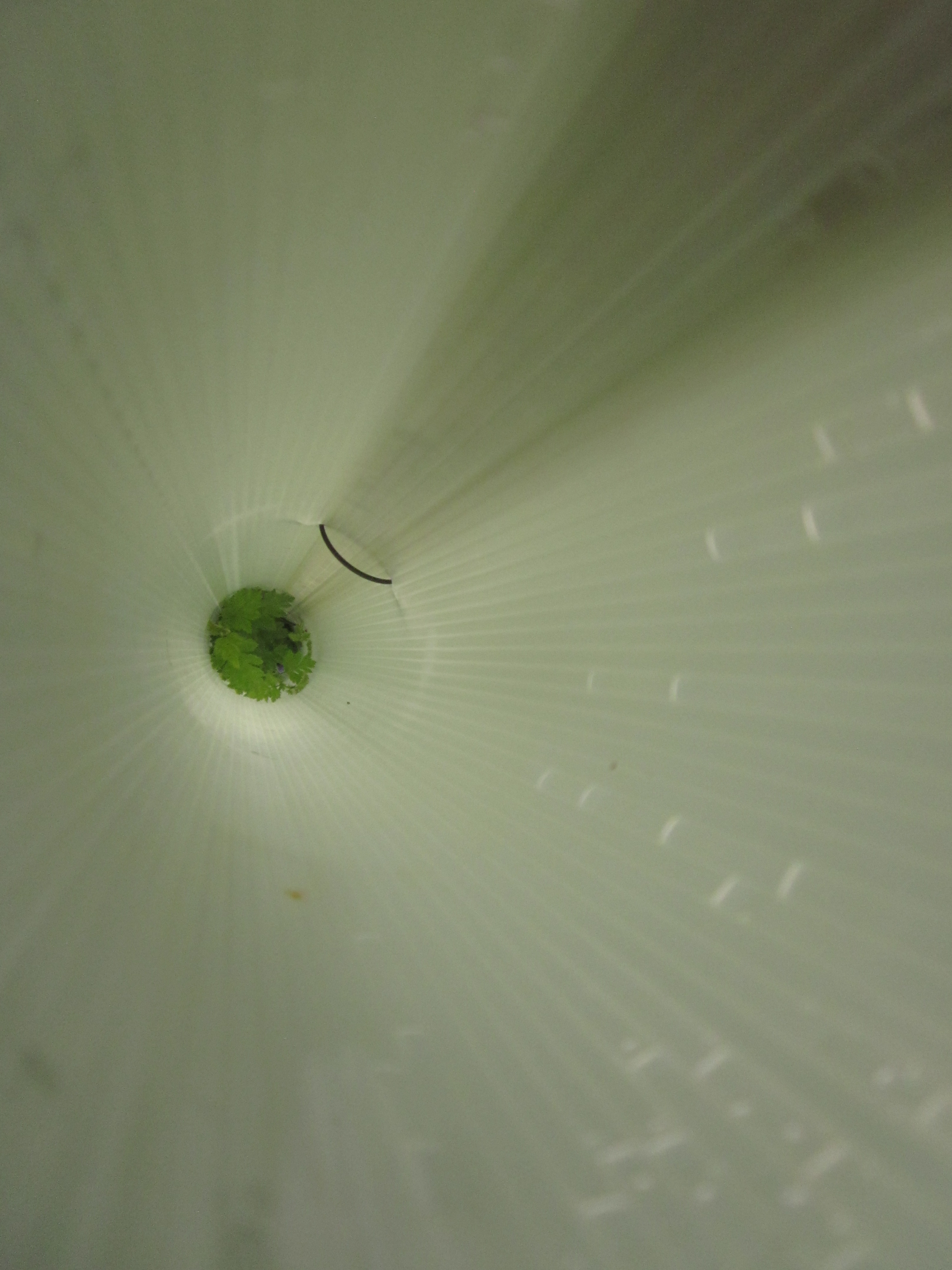
We went back this last weekend, four months later, to see the bluebells in Lower Wood, which were spectacular. And it was wonderful to look down the tree guards and see the first leaves growing on the trees we planted.

Two days later, I heard that a poem I wrote, inspired by the experience of planting trees, had been highly commended by Gillian Clarke in The Rialto Nature and Place Poetry Competition 2022. It’s called ‘Heeling in at Lower Wood’, and I’m really looking forward to seeing it published in The Rialto later this year, alongside the winners.

Reviews of ‘Other Women’s Kitchens’

I’m delighted to be able to share two early reviews of my poetry pamphlet, which was published by Seren Books in September. Many thanks to previous Mslexia Pamphlet Competition winner Sarah Wimbush for this review on the Butcher’s Dog blog:

https://www.butchersdogmagazine.co.uk/post/sarah-wimbush-reviews-alison-binney-s-debut-pamphlet-other-women-s-kitchens

And it’s lovely to discover the rich resource that is Judy Darley’s website, full of reviews, including this one, for which I’m hugely grateful:

Poetry review – Other Women’s Kitchens by Alison Binney

‘Other Women’s Kitchens’ – Mslexia Poetry Pamphlet Competition Winner

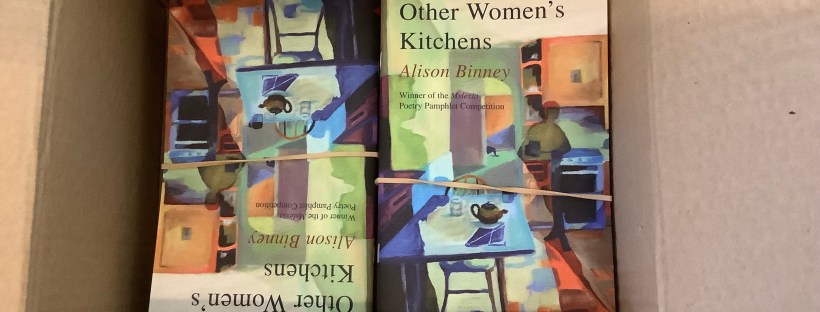
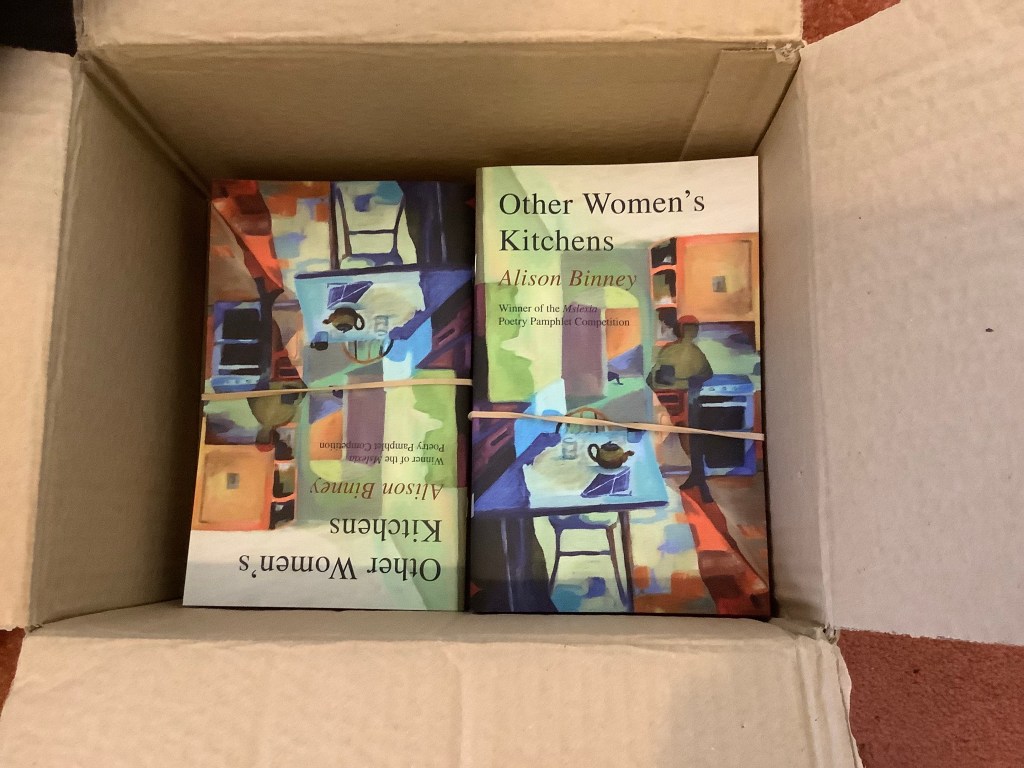
I’m delighted to announce the publication of my debut pamphlet, ‘Other Women’s Kitchens’, by Seren. It’s available for purchase from the Seren Books website for £5 here. I’m hugely grateful to Seren poetry editor Amy Wack, firstly for selecting this pamphlet as the winner of the Mslexia Poetry Pamphlet Competition, and then for making the whole process of publication such a smooth and joyous one.

This pamphlet gathers together poems written over a four-year period exploring themes of coming out, falling in love and finding a sense of community. The beautiful cover art is by Kate Winter, who responded with great sensitivity both to the poems themselves, and to photos of my parents’ kitchen, in creating the paintings that grace the front and back covers.

I’m fascinated by kitchens – for me, very often the rooms where the most interesting and significant conversations happen. When searching for a title for this pamphlet, it struck me how many of the poems in it are located in kitchens, or in kitchen-like spaces, or make reference to food. There’s the makeshift kitchen in a wicker barn where Anne Lister and her partner Ann Walker brew tea and coffee on the last day recorded in Anne Lister’s diary. There are the married women who ‘came home hungry, smelling of lentils’, after their encounters in a supermarket car park. There’s ‘tea with the lady mayoress’ in a found poem sourced from an old edition of the Girl Guide Handbook. And then there’s the kitchen as the location of a first date – probably just the sort of kitchen, complete with ‘individual chocolate mousses’, that my younger, uncertain self would have been delighted to know was waiting for her in the not-too-distant future.

It’s very exciting to have my first pamphlet out in the world. I hope these poems find readers who will savour them.

These are tender yet fierce lyric poems about self-discovery and coming home to oneself against all odds. I was struck by the emotional truths at the core of Binney’s debut pamphlet, reminding me of vital queer memories ranging from coming out to stepping into Gay’s the Word for the first time.

Mary Jean Chan

FenSpeak

I’ve been going along to FenSpeak, a bimonthly poetry and storytelling event based in the Babylon Arts Gallery in Ely, for several years now. Each session features one or two guest poets, alongside plenty of open mic slots. The first time I went, I was struck by the friendliness and inclusivity of this event, and the particularly warm welcome given to newcomers. Thanks to the dedication and ingenuity of its co-hosts, Beth Hartley and Stewart Carswell, FenSpeak has not only survived the pandemic, but has evolved and flourished in its current Zoom form.

I’m a passionate hill-walker, so having been born and brought up in Norfolk, and having lived most of my adult life in Cambridge, it’s taken me quite a while to appreciate the beauty of the flat Fenland landscape. The poems shared at FenSpeak, as at any open mic, cover a huge and eclectic range of subjects, but it’s always a special treat when someone shares a poem that captures the distinctive qualities of this area, whether that’s the infamous vast skies, the birdlife or the rich peaty soil. These poems help to bind us together as shared inhabitants of this unique and peculiar landscape.

Last night’s guest poet, Jonathan Totman, is a former Fenland Poet Laureate, so there were plenty of evocative landscape and nature poems, alongside some beautiful and poignant poems about family relationships, past and present. I’m really looking forward to reading Jonathan’s first collection from Pindrop Press, Night Shift.

And the open mic offered up what Beth described perfectly as ‘a rich layer cake of a night’ – such a fine blend of humour, intimacy, longing, pain and vivid, sensory detail, shared by such a lovely bunch of people. It was one of those rare Zoom evenings when a genuine sense of community was evoked, even amongst people who had never gathered in person in exactly that combination before.

Stewart and Beth deserve huge credit for sustaining this sense of community and welcome so well during such a challenging period. So it’s wonderful that each of them has a pamphlet published this autumn, and that both will be the FenSpeak featured poets at the next event on 20th October. I’m looking forward to it already!

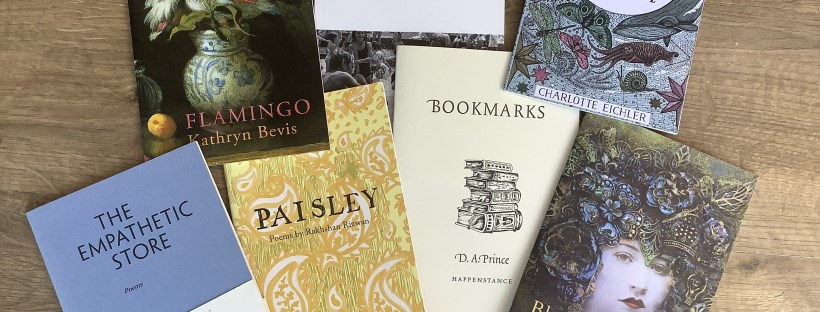
Beth Hartley’s pamphlet, What if Stars, is published by Allographic Press and can be purchased here.

Stewart Carswell’s pamphlet, Earthworks, is forthcoming from Indigo Dreams and will be available soon here.

Butcher’s Dog Issue 15

Last summer I attended a five-day online Arvon course on Queer Poetry, led by Caroline Bird and Richard Scott. Although it was disappointing not to be able to attend in-person, I found the experience just as productive as previous residential Arvon courses I’ve been on, thanks to expert tutoring by Caroline and Richard.

One of the poems I wrote on the course is Late, which reflects on the experience of never quite feeling I was in the right place at the right time.

I was delighted that this poem was selected for issue 15 of Butcher’s Dog, one of my top poetry magazines. My experience of the selection and editorial process with this magazine is second to none. It’s no accident that so many poets tweet excitedly about even having made the Butcher’s Dog longlist.

It was a particular honour to appear in this issue alongside some of my poetry heroes, Marvin Thompson, Dean Atta and Robin Houghton, whose regular, thorough and selfless updates about magazine submissions and competitions show the poetry community at its finest.

On 6th June I attended the magazine launch via Zoom, and really enjoyed hearing so many varied and vibrant poems in the poets’ own voices.

Thank you so much to Jo Clement and Ian Humphreys for your superb editorship and hosting of the live launch.